
On this page
- What Is Stress, and how Does It Happen?
- 25 Natural Ways to Reduce Stress and Relax Your Mind
- Practice Slow, Deep Breathing
- Listen to Relaxing Music
- Take a Short Walk
- Spend Time Outdoors in Natural Light
- Give Yourself a Hand Massage
- Count Backward to Calm Racing Thoughts
- Stretch Your Body
- Massage Your Feet With a Soft Ball
- Close Your Eyes and Take a Mental Break
- Squeeze a Stress Ball
- Try Progressive Muscle Relaxation
- Spend a Few Minutes Alone
- Organize One Small Area
- Try a Gentle Yoga Pose
- Enjoy a Small Piece of Dark Chocolate
- Practice Mindfulness Meditation
- Spend Time With a Pet
- Chew Sugar-Free Gum
- Sip Green Tea or Another Caffeine-Free Drink
- Find Something That Makes You Laugh
- Splash Cool Water on Your Face or Wrists
- Create a Calm Space at Home
- Write Down Your Thoughts
- Enjoy Honey as Part of a Balanced Diet
- Talk to a Friend or Someone You Trust
- How to Reduce Stress Naturally Every Day
- Morning: Start Your Day Calmly
- Afternoon: Release Built-Up Tension
- Evening: Prepare Your Mind for Rest
- How to Relieve Stress in Five Minutes or Less
- Natural Lifestyle Changes That Help Manage Stress
- Get Enough Sleep
- Exercise Regularly
- Eat Balanced Meals
- Reduce Excessive Caffeine
- Set Healthy Boundaries
- Spend Less Time on Unnecessary Screen Use
- What Should You Do When Stress Does Not Go Away?
- Frequently Asked Questions About Natural Stress Relief
- How can I remove stress naturally and quickly?
- What is the fastest natural way to relieve stress?
- How can I reduce stress at home?
- Which foods help with stress?
- Does walking help reduce stress?
- Can stress go away without medication?
- How can I stop overthinking and relax my mind?
- How long does it take for natural stress relief techniques to work?
- Final Thoughts
- Sources & References
- Related Posts
Stress or anxiety is normal, but when it get you engaged, overthinking, it can be more harmful for your daily life and can affect your mood, sleep, concentration, relationships, and physical health. Stress can even led to hair loss, lol .
You might have a bad office environment or the boss who gave you work deadlines, leading you to work overtime and financial worries to family responsibilities and everyday challenges, these all sounds common but how your body or mind reacts to it is important to consider.
There are tons of therapies, expensive psychiatrists available to help you out but the good news is that you do not always need an expensive treatment, complicated routine, or an entire day off to begin managing stress.
A Small change to your daily routine, thinking behaviour and mental exercise can help you feel calmer, think more clearly, and respond to difficult situations more effectively.
But how you can manage to get over and reduce the stress effectively ?
Lets not make this article complicated to read and reach to point. There are several natural habits and routine change that can help you to remove stress naturally.
Deep breathing, walking in fresh air, listening to your favourite music, spending time with loved ones, writing down your beautiful thoughts, doing some art work and even drinking water can help you to relax or sipping your homemade drinks too.
These practices can help you to feel better and relaxed if practiced regularly. Quick ways are possible to relax but build healthy ways to handle challenges without allowing stress to control your day.
Understanding what causes your stress is an important first step.
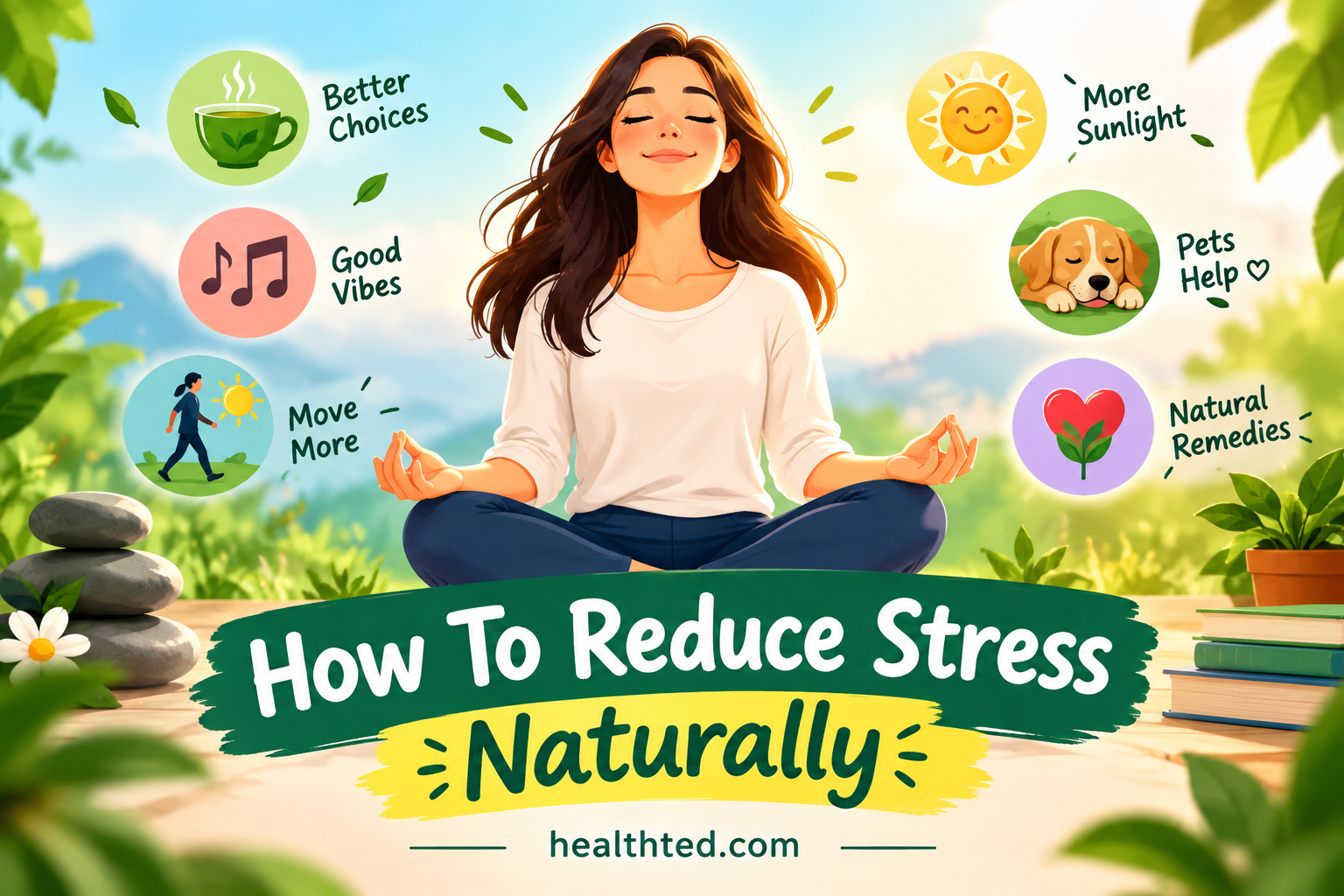
In this guide, you will discover 25 natural stress relief practices, and how to implement and make them part of your daily routine to fight anxiety and stress.
What Is Stress, and how Does It Happen?
Stress is your body’s response to a challenge, demand, or perceived threat. When you encounter a stressful situation, your body activates its natural stress response, releasing hormones such as adrenaline and cortisol. These changes can increase alertness, raise your heart rate, and prepare you to respond to the situation.
Common causes of stress include:
- Work pressure, deadlines, and job insecurity.
- Financial concerns and household expenses.
- Family responsibilities and relationship difficulties.
- Health concerns and uncertainty about the future.
- Lack of sleep and insufficient physical activity.
- Excessive screen time and information overload.
- Major life changes or feeling that you have little control over a situation.
25 Natural Ways to Reduce Stress and Relax Your Mind
1. Practice Slow, Deep Breathing
Deep breathing helps you to reduce stress naturally, when you feel stress or anxious, your breathing pattern can help.
Breathing helps you to relax and focus and same impacts your overall body. The best thing about it is you do not need any special area or equipments. You can do it at your desk, while sitting in your car before driving, or at home.
How to practice:
- Sit comfortably and relax your shoulders.
- Breathe gently through your nose for about four seconds.
- Exhale slowly for about six seconds, without forcing your breath.
- Repeat for one to three minutes, keeping your breathing comfortable.
If counting makes you uncomfortable, simply focus on making your exhalation a little slower than your inhalation.
Slow breathing can help reduce feelings of tension and promote relaxation. Stop if you feel dizzy or uncomfortable and return to your normal breathing.
2. Listen to Relaxing Music
Music can influence your mood and provide a welcome break from racing thoughts. A familiar song may bring back pleasant memories, while gentle instrumental music can create a calmer atmosphere when you need to concentrate or unwind.
The best music for stress relief is not necessarily classical music. Some people prefer nature sounds, soft acoustic songs, instrumental tracks, or their favorite upbeat music.
How to use music for stress relief:
- Play a calming playlist during a short break.
- Listen to gentle music before bedtime as part of a relaxing routine.
- Choose upbeat songs when you need a mood lift.
- Put your phone aside and focus on the music rather than scrolling.
Try listening for five to ten minutes without multitasking. Even a brief pause can help you mentally step away from a stressful situation.
3. Take a Short Walk
A short walk is an accessible way to manage stress while giving your mind a break. Physical activity can improve mood, release built-up tension, and support better sleep.
You do not need to complete a long workout to get started. Walking around your neighborhood, taking the stairs, or strolling through a nearby park can be enough to interrupt a stressful day.
Try this simple routine: Walk at a comfortable pace for five to fifteen minutes. Leave your phone in your pocket if possible, notice the surroundings, and pay attention to your steps and breathing.
If you work at a desk, consider taking a short walking break between tasks. Over time, regular physical activity can become an important part of your stress management routine.
4. Spend Time Outdoors in Natural Light
Spending time outside can help you step away from indoor distractions and reconnect with your surroundings. Natural light also helps regulate your body’s internal clock, which plays a role in sleep and wakefulness.
You could sit on a balcony, walk through a garden, visit a local park, or enjoy a quiet moment near an open window.
Try spending ten minutes outdoors during the day when practical. Notice the trees, sky, fresh air, or sounds around you instead of focusing on your phone.
Natural light and outdoor time may support mood and sleep, although they are not a replacement for treatment when someone has depression or another mental health condition. Protect your skin from excessive sun exposure, particularly during strong midday sunlight.
5. Give Yourself a Hand Massage
Stress often shows up physically as tight shoulders, clenched hands, or a stiff neck. A gentle hand massage can provide a few minutes of comfort and help you pay attention to physical tension.
You can do this at home, at work, or while taking a break from studying.
How to give yourself a hand massage:
- Apply a small amount of hand lotion if desired.
- Gently rub the palm of one hand using the thumb of the other.
- Massage the base of the thumb with small circular movements.
- Slowly massage each finger and repeat on the other hand.
Keep the pressure comfortable and avoid pressing on painful or injured areas. A hand massage may help you relax, but claims that it directly relieves tension in the scalp or neck should not be treated as guaranteed effects.
6. Count Backward to Calm Racing Thoughts
When your thoughts are moving too quickly, a simple counting exercise can redirect your attention away from worry.
For example, slowly count backward from 30 to zero. If that becomes too easy, count backward from 100 in steps of three.
The purpose is not to solve your problems through mathematics. It is to give your mind one manageable task instead of allowing it to jump repeatedly between worries.
You can combine counting with gentle breathing. Inhale naturally, then count silently as you exhale.
This technique may be particularly useful before a presentation, during a stressful commute as a passenger, or when you need a short mental reset. If counting increases your frustration, choose a simpler grounding exercise instead.
7. Stretch Your Body
Long periods of sitting can contribute to stiffness and muscle tension. Gentle stretching offers an easy way to loosen up and take a break from demanding tasks.
You can stretch at your desk without changing clothes or using exercise equipment.
Try these simple movements:
- Roll your shoulders backward slowly five times.
- Gently turn your head from side to side without forcing the movement.
- Reach your arms overhead and take a comfortable breath.
- Open your chest by drawing your shoulders gently backward.
- Stand up and stretch your calves if you have been sitting for a long time.
Move slowly and avoid bouncing or pushing into pain. Stretching is not a complete solution for emotional stress, but it can help relieve physical discomfort and create a useful pause in your day.
8. Massage Your Feet With a Soft Ball
A gentle foot massage can be relaxing, especially after a day spent standing or walking. You can use a soft massage ball or a tennis ball to roll beneath your feet while seated.
Place the ball under one foot and move your foot forward and backward with light pressure for about one minute. Repeat on the other side.
Keep the pressure gentle, particularly if your feet are sensitive. Avoid this technique over an injury or an area that is swollen or painful.
The main benefit is a soothing break and temporary relief of foot tension. There is not enough evidence to promise that rolling a ball under your feet will directly reduce psychological stress or treat anxiety.
9. Close Your Eyes and Take a Mental Break
Sometimes, the easiest way to reset your mind is to stop taking in new information for a moment.
Constant notifications, conversations, bright screens, and background noise can leave you feeling mentally overloaded. Closing your eyes briefly in a safe, comfortable place can give you a chance to pause.
Sit comfortably, relax your jaw, and let your shoulders drop. Take several natural breaths and notice how your body feels.
Start with 30 seconds to two minutes. You do not need to empty your mind or force yourself to feel peaceful.
If you are at work, use this as a short break between tasks. Never close your eyes while driving, operating machinery, or doing anything that requires attention to your surroundings.
10. Squeeze a Stress Ball
A stress ball is a small, portable tool that can give your hands something simple to do when you feel restless or tense.
Hold the ball comfortably, squeeze it gently for three to five seconds, and then release your grip. Repeat several times while breathing normally.
You can use it while thinking through a problem, taking a phone call, or waiting for an appointment, provided it does not distract you from the task.
A stress ball is not a cure for stress, but the repetitive movement may help some people feel more settled. If you do not have one, gently opening and closing your hands can serve a similar purpose.
11. Try Progressive Muscle Relaxation
Progressive muscle relaxation is a technique that involves gently tensing and then releasing different muscle groups. It can help you recognize the difference between physical tension and relaxation.
This practice may be particularly useful if you hold tension in your shoulders, jaw, hands, or legs.
How to practice it:
- Sit or lie down in a comfortable position.
- Gently tighten the muscles in your hands for about five seconds.
- Release them and notice the feeling of relaxation.
- Repeat with your shoulders, arms, face, abdomen, and legs.
- Keep breathing normally throughout the exercise.
Do not tense muscles forcefully or include areas affected by injury or pain. You can also skip any body part that feels uncomfortable.
Start with three to five minutes. With practice, you may become better at noticing when stress is causing you to clench your jaw or raise your shoulders.
12. Spend a Few Minutes Alone
Spending time alone can give you space to process emotions, gather your thoughts, and recover from a busy environment.
This does not mean you need to isolate yourself or avoid people whenever life becomes difficult. The goal is to take a short, intentional break when you need one.
You might sit quietly with a cup of tea, spend five minutes on your balcony, or take a break in a peaceful room.
During this time, ask yourself: What is bothering me most right now? Is there one small thing I can do about it? What can wait until later?
These questions can help turn a vague feeling of overwhelm into a more manageable problem.
If being alone tends to make your worries worse, try a calming activity with a trusted friend instead.
13. Organize One Small Area
Clutter is not the cause of everyone’s stress, but a disorganized workspace can make it harder to find things and concentrate.
When your mind already feels overloaded, looking at a crowded desk or a long list of unfinished tasks may add to the feeling that everything needs attention immediately.
Instead of trying to clean your entire home, choose one small area.
For example, spend five minutes putting away loose papers, clearing your desk, organizing your bag, or writing tomorrow’s three most important tasks.
The goal is not to achieve a perfect home. It is to make your immediate surroundings a little easier to manage.
If you are overwhelmed by responsibilities, remember that organizing can help with practical stressors, but you do not have to finish every task before allowing yourself to rest.
14. Try a Gentle Yoga Pose
Yoga combines movement, breathing, and attention to the present moment. Some people find it helpful for reducing everyday stress and improving their sense of well-being.
You do not need to complete a full yoga session. A few minutes of gentle stretching may be enough to create a relaxing pause.
One option is legs up the wall pose. Sit sideways next to a wall, carefully lie back, and rest your legs upward against it if this feels comfortable. Relax your arms and breathe normally for a minute or two.
Come out of the position slowly. Avoid it if the position causes pain, dizziness, or discomfort, and choose another gentle stretch if getting onto the floor is difficult.
Yoga can be adapted to different fitness levels, but it should not be forced. The purpose is comfort, not perfect technique.
15. Enjoy a Small Piece of Dark Chocolate
Food can be part of a pleasant, balanced approach to stress management. If you enjoy chocolate, a small piece of dark chocolate may provide a satisfying break.
Dark chocolate contains cocoa compounds, including flavanols, that have been studied for their potential effects on health. However, research does not establish that eating chocolate reliably lowers stress hormones or treats anxiety.
Choose a portion that fits your dietary needs and enjoy it slowly rather than eating while rushing through work.
You can also support your well-being with regular, balanced meals that include vegetables, fruit, whole grains, protein, and healthy fats.
Try not to rely on sugary snacks whenever you feel stressed. Food can bring enjoyment, but lasting stress management usually requires a combination of healthy habits and practical coping strategies.
16. Practice Mindfulness Meditation
Meditation is a simple practice that trains you to notice your thoughts and feelings without immediately reacting to them.
You do not need to stop thinking or force your mind to become completely quiet. Thoughts will naturally appear. The important part is gently returning your attention to the present.
A beginner-friendly five-minute meditation:
- Sit in a comfortable position.
- Let your shoulders relax and breathe naturally.
- Pay attention to the feeling of air entering and leaving your body.
- When a thought appears, acknowledge it without judging yourself.
- Gently return your attention to your breathing.
If you find it difficult to sit still, try a walking meditation by paying attention to each step.
Regular mindfulness practice may help some people manage stress and anxiety. Begin with a few minutes daily and gradually increase the time if you find it helpful. Meditation is not comfortable for everyone, so choose another grounding technique if it makes you feel more distressed.
17. Spend Time With a Pet
For people who enjoy animals, spending time with a pet can offer companionship, comfort, and a welcome distraction from everyday worries.
You might gently stroke your cat, play with your dog, watch your fish swim, or sit beside your pet for a few quiet minutes.
Pets can also encourage routines, outdoor activity, and social interaction. However, their effects vary from person to person, and caring for an animal can sometimes create additional responsibilities.
If you have a pet, try setting aside a few minutes each day for undistracted interaction. Pay attention to its behavior and respect its boundaries.
If you do not have a pet, spending time with a trusted friend or family member can provide similar opportunities for connection and comfort.
18. Chew Sugar-Free Gum
Chewing gum is a convenient option when you need something simple to do during a short break. Some studies have explored a possible relationship between gum chewing, mood, and perceived stress, but the findings are mixed.
If you enjoy gum, choose a sugar-free variety and chew it for a few minutes when it is convenient.
It may give you a brief distraction while working through a difficult task, but it should not replace other stress management techniques.
Avoid chewing gum if it causes jaw discomfort or aggravates a jaw condition. If you do not enjoy gum, you can try sipping water or taking several slow breaths instead.
19. Sip Green Tea or Another Caffeine-Free Drink
Taking a break for a warm drink can create a small moment of comfort in an otherwise busy day.
Green tea contains L-theanine, an amino acid that has been studied for its possible effects on relaxation and attention. However, the evidence does not mean that a cup of green tea will reliably eliminate stress.
Green tea also contains caffeine, which can increase restlessness or interfere with sleep in people who are sensitive to it.
If caffeine makes you feel anxious, consider a caffeine-free herbal infusion or warm water instead. Check ingredients and medication interactions when using herbal products regularly, particularly if you are pregnant, breastfeeding, or taking medication.
Prepare your drink, sit somewhere comfortable, and take a few minutes to enjoy it without checking notifications.
20. Find Something That Makes You Laugh
Laughter can provide a welcome break from worry and make a difficult day feel a little lighter. Sharing a funny story, watching a short comedy clip, or talking with someone who makes you smile can help improve your mood.
You do not need to force yourself to laugh when you are upset. Sometimes a gentle distraction is enough.
Try watching a short, funny video, remembering a humorous moment, or sending a lighthearted message to a friend.
Laughter may support relaxation and social connection, but it is not a substitute for addressing serious problems. You can acknowledge that a situation is difficult while still making room for enjoyable moments.
21. Splash Cool Water on Your Face or Wrists
A little cool water can be refreshing when you feel overheated, tired, or mentally overloaded.
Try rinsing your face with cool water or running your wrists under a comfortable stream of cool water for a short time. Notice the sensation and take a few slow breaths.
The cooling sensation can help redirect your attention to the present moment, although there is no guarantee that it will reduce stress throughout your body.
Use cool rather than painfully cold water, and avoid extreme cold exposure as a stress treatment. You do not need ice baths or other intense methods to take a refreshing break.
22. Create a Calm Space at Home
Having a comfortable place to unwind can make it easier to transition from work or household responsibilities to rest.
Your relaxation space does not need to be a separate room. A quiet corner, comfortable chair, bedside area, or small balcony can work just as well.
Make the space inviting with a soft cushion, comfortable lighting, a favorite book, or gentle background music. Keep unnecessary distractions to a minimum.
You can also use this space for breathing exercises, journaling, reading, or simply sitting quietly.
The most important thing is to associate the space with a realistic opportunity to pause. Even five minutes in a comfortable environment can provide a useful break.
23. Write Down Your Thoughts
Writing can help you organize worries that feel confusing or overwhelming when they stay in your head.
You do not need to be a skilled writer or maintain a perfect journal. A notebook, notes app, or simple piece of paper is enough.
Try writing answers to these three questions:
- What is making me feel stressed right now?
- Which parts of this situation can I control?
- What is one small step I can take next?
You can also write down what went well during the day, what you are grateful for, or what you want to discuss with someone you trust.
Journaling may help you recognize recurring stressors and identify practical solutions. If writing about difficult experiences makes you feel significantly worse, stop and try a different coping method or discuss the experience with a mental health professional.
24. Enjoy Honey as Part of a Balanced Diet
Honey is a natural sweetener that many people enjoy in tea, warm water, or food. If a warm drink with honey feels comforting, it can be part of a relaxing routine.
However, honey should not be considered a proven treatment for stress, depression, or anxiety. There is insufficient evidence that eating a spoonful of honey directly reduces stress hormones or treats these conditions.
If you like honey, use a modest amount according to your dietary needs. Remember that it contains sugar and should not be treated as a special stress-relief remedy.
For a calming ritual, focus on the full experience: prepare a warm drink, sit somewhere comfortable, slow down, and give yourself a few minutes away from stressful tasks.
Never give honey to a child under 12 months of age.
25. Talk to a Friend or Someone You Trust
You do not have to manage every stressful situation alone. Talking with someone who listens without judgment can help you feel supported and see a problem from a different perspective.
Sometimes you need advice. At other times, you simply need someone to listen.
You could tell a friend, family member, partner, or trusted colleague what has been bothering you. Be clear about what would help: listening, practical suggestions, or assistance with a particular task.
If you are uncomfortable discussing your feelings face-to-face, consider writing a message or arranging a phone call.
Healthy social connections can support emotional well-being, but choose someone who respects your privacy and treats your concerns seriously.
If stress is persistent, overwhelming, or interfering with your daily life, a qualified mental health professional can provide additional support.
How to Reduce Stress Naturally Every Day
Trying all 25 methods at once can feel like another responsibility. Instead, choose two or three strategies that fit your lifestyle and practice them consistently.
Here is a simple daily routine you can adapt to your schedule.
Morning: Start Your Day Calmly
- Spend two minutes breathing slowly before checking your phone.
- Get some natural daylight when practical.
- Identify your three most important tasks for the day.
- Eat a balanced breakfast if it suits your routine.
Afternoon: Release Built-Up Tension
- Take a five- to ten-minute walk.
- Stretch your shoulders and neck after sitting for long periods.
- Drink water and take a break from screens.
- Speak to someone supportive if a problem is weighing on you.
Evening: Prepare Your Mind for Rest
- Reduce stimulating activities before bedtime.
- Listen to calming music or read something enjoyable.
- Write down tomorrow’s tasks so you do not have to keep remembering them.
- Maintain a regular sleep schedule and aim for sufficient rest.
You do not have to follow this routine perfectly. A few manageable habits are more useful than an elaborate plan that leaves you feeling guilty when you cannot complete it.
How to Relieve Stress in Five Minutes or Less
If you need a quick reset, try one of these short activities.
| Time available | What to do |
|---|---|
| 30 seconds | Relax your jaw and drop your shoulders. |
| 1 minute | Take a few slow, comfortable breaths. |
| 2 minutes | Close your eyes in a safe place or practice grounding. |
| 3 minutes | Stretch your shoulders, arms, and back. |
| 5 minutes | Walk outside, meditate, journal, or listen to a favorite song. |
These techniques may help you manage a stressful moment, but their effects vary. If the underlying cause is an excessive workload, financial pressure, conflict, or lack of rest, you may also need to address that problem directly.
Natural Lifestyle Changes That Help Manage Stress
Quick relaxation techniques are useful, but long-term stress management also depends on your everyday habits.
Get Enough Sleep
Poor sleep can make it harder to regulate emotions, concentrate, and handle everyday challenges. Many adults need around seven to nine hours of sleep each night, although individual needs vary.
Try to maintain consistent sleep and wake times, reduce late-night screen use if it affects your sleep, and create a comfortable bedroom environment.
If worries keep you awake regularly, write down your concerns earlier in the evening and consider speaking with a healthcare professional if the problem continues.
Exercise Regularly
Physical activity is one of the most useful habits for supporting mental and physical well-being. You do not need to join a gym or follow an intense workout plan.
Walking, dancing, cycling, swimming, gardening, or doing gentle yoga can all help you become more active.
Start with a manageable amount and gradually build up. Choose activities you enjoy so that movement becomes a sustainable part of your routine.
Eat Balanced Meals
Skipping meals or relying heavily on highly processed foods may leave you feeling tired or make it harder to maintain steady energy levels.
Try to eat regular, balanced meals that include a variety of vegetables, fruits, whole grains, protein sources, and healthy fats.
Stay hydrated throughout the day. You do not need a special detox drink, supplement, or restrictive diet to manage stress.
Reduce Excessive Caffeine
Coffee, tea, energy drinks, and some soft drinks contain caffeine. For some people, too much caffeine can cause jitteriness, palpitations, sleep difficulties, or symptoms that resemble anxiety.
If you notice these effects, consider reducing your intake gradually, especially later in the day.
Pay attention to your own response rather than assuming that the same amount of caffeine affects everyone equally.
Set Healthy Boundaries
Stress sometimes comes from trying to do too much or feeling responsible for everyone’s needs.
Learn to recognize when your schedule has become unrealistic. Where possible, say no to additional commitments, delegate tasks, ask for help, or divide large projects into smaller steps.
Healthy boundaries are not selfish. They help you protect the time and energy needed for rest, relationships, and responsibilities that matter most.
Spend Less Time on Unnecessary Screen Use
Constant notifications, upsetting news, and endless scrolling can make it difficult to relax.
Consider turning off nonessential notifications, setting limits on distracting apps, and keeping your phone away during meals or before bedtime.
You do not have to stop using technology completely. The goal is to make sure that it serves your needs instead of taking up every quiet moment.
What Should You Do When Stress Does Not Go Away?
Occasional stress is a normal part of life. However, ongoing stress deserves attention, especially when it affects your health, relationships, work, or ability to manage everyday responsibilities.
Consider speaking with a doctor, psychologist, counselor, or other qualified mental health professional if you experience persistent anxiety, frequent panic, continuing sleep problems, difficulty functioning, or feelings of hopelessness.
Professional support can help you understand the causes of your distress and explore appropriate treatments or coping strategies. You do not need to wait until you reach a breaking point before asking for help.
Natural approaches such as exercise, breathing, mindfulness, and social support can complement professional care, but they should not replace necessary treatment.
If you feel at risk of harming yourself or cannot keep yourself safe, seek urgent local emergency or crisis support.
Frequently Asked Questions About Natural Stress Relief
1. How can I remove stress naturally and quickly?
Start with a simple technique such as slow breathing, a short walk, gentle stretching, listening to music, or talking to someone you trust. These activities may help reduce immediate tension, although no method works instantly for everyone.
2. What is the fastest natural way to relieve stress?
There is no single fastest method for everyone. Slow breathing and grounding exercises are convenient because you can use them almost anywhere. Try one for a minute or two and notice whether it helps you feel more settled.
3. How can I reduce stress at home?
Create a comfortable place to relax, maintain a regular sleep routine, take short movement breaks, prepare balanced meals, and make time for enjoyable activities. You can also try journaling, meditation, or talking to someone you trust.
4. Which foods help with stress?
A balanced diet that includes fruits, vegetables, whole grains, nuts, seeds, protein sources, and healthy fats supports general health. There is no single food that eliminates stress, and chocolate, honey, and green tea should not be treated as cures for anxiety.
5. Does walking help reduce stress?
Yes, walking can support mood and help you take a break from stressful thoughts. Even a short walk may be useful, while regular physical activity can provide broader health benefits over time.
6. Can stress go away without medication?
Everyday stress may improve with lifestyle changes, relaxation techniques, social support, and changes to stressful circumstances. However, persistent anxiety or other mental health conditions may require professional treatment, which can include therapy, medication, or a combination of approaches.
7. How can I stop overthinking and relax my mind?
Try writing down your concerns, identifying what you can control, and choosing one practical next step. Mindfulness, gentle breathing, regular exercise, and limiting late-night screen use may also help. If overthinking consistently interferes with sleep or daily life, consider professional support.
8. How long does it take for natural stress relief techniques to work?
Some people feel calmer after a few minutes of breathing, stretching, or walking. Other habits, such as regular exercise, improved sleep, and mindfulness practice, may take longer to produce noticeable benefits. Results vary depending on the person and the source of stress.
Final Thoughts
Learning how to remove stress naturally is less about finding one perfect remedy and more about building a collection of healthy habits you can rely on when life becomes difficult.
A few slow breaths, a short walk, a relaxing song, a moment outdoors, or a conversation with a trusted friend may help you feel more grounded. Over time, regular movement, sufficient sleep, balanced nutrition, and healthy boundaries can make it easier to manage everyday challenges.
Start small. Choose one technique that feels realistic today and give yourself permission to take a break without feeling guilty.
You do not need to remove every source of stress to improve your well-being. The goal is to understand your stress, respond to it in healthier ways, and seek support when you need it.
Sources & References
- National Institute of Mental Health — Mental health and self-care guidance.
- NHS — Breathing exercises for stress relief.
- Centers for Disease Control and Prevention — Managing stress and supporting mental health.
Found this guide useful?
Save it, share it, or continue with another guide from the same health topic.
Read Next
Continue with another guide from this category.


Health information on HealthTed is for educational purposes and does not replace professional medical advice.
More health guides